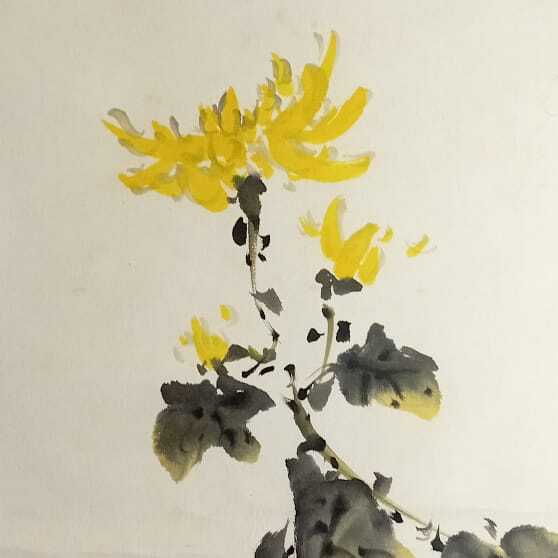
Ōhashi Gekkō 大橋月皎 c. 1895/1896–1967
Works on Shikishi
Ōhashi Gekkō was a Japanese artist, illustrator and specialist in theatrical imagery whose career extended from the late Taishō period into postwar Shōwa. His work is closely associated with kabuki culture, newspaper and magazine illustration, bijinga, book design and small-format paintings on shikishi.
Sources differ on his year of birth, giving either 1895 or 1896. Later biographical accounts state that he was born on Shōdoshima Island in Kagawa Prefecture. Early in his career, Gekkō was connected with the artist and illustrator Itō Seiu. By the end of the 1910s, he had begun producing illustrations for newspapers and periodicals.
During the 1920s and 1930s, Ōhashi worked for theatrical, literary and women’s magazines, creating illustrations for serialized fiction, covers, frontispieces and images of kabuki characters. Publications documenting his work include Shin Engei, Engei Gahō, Fujin Kurabu and Ie no Hikari, as well as books and anthologies preserved in the National Diet Library of Japan. His graphic work from this period combines theatrical subjects, female figures, historical drama and the literary imagination associated with Taishō-era popular culture.
Kabuki became the central subject of his mature work. Gekkō possessed detailed knowledge of theatrical repertoire, costumes and role types and produced portraits and narrative scenes connected with specific plays and performers. Many of these works were painted on shikishi. A theatrical shikishi by the artist is held by the Osaka Museum of History.
In 1934, the future textile artist Kubota Itchiku studied figure drawing under Ōhashi Gekkō. This relationship is recorded in Itchiku’s official chronology and reflects Gekkō’s professional standing as a teacher of figurative drawing.
During the postwar period, Kyoto Hanga-in published multicolour woodblock prints based on Gekkō’s designs for classical kabuki subjects. Known compositions include Shibaraku, Sukeroku, Kanjinchō, Musume Dōjōji, Kagami Jishi and Shinjū Ten no Amijima. These prints were produced through the traditional collaborative system in which Gekkō supplied the original design and specialist craftsmen carried out the carving and printing.
Works by Ōhashi Gekkō are held by the Honolulu Museum of Art, Yayoi Museum and Osaka Museum of History. His art has also appeared in Japanese exhibitions devoted to modern ukiyo-e, kabuki culture, book illustration and the visual culture of the Taishō and Shōwa periods. Today, he is recognised as a distinctive figure in the history of Japanese theatrical art and popular illustration of the twentieth century.
Sources differ on his year of birth, giving either 1895 or 1896. Later biographical accounts state that he was born on Shōdoshima Island in Kagawa Prefecture. Early in his career, Gekkō was connected with the artist and illustrator Itō Seiu. By the end of the 1910s, he had begun producing illustrations for newspapers and periodicals.
During the 1920s and 1930s, Ōhashi worked for theatrical, literary and women’s magazines, creating illustrations for serialized fiction, covers, frontispieces and images of kabuki characters. Publications documenting his work include Shin Engei, Engei Gahō, Fujin Kurabu and Ie no Hikari, as well as books and anthologies preserved in the National Diet Library of Japan. His graphic work from this period combines theatrical subjects, female figures, historical drama and the literary imagination associated with Taishō-era popular culture.
Kabuki became the central subject of his mature work. Gekkō possessed detailed knowledge of theatrical repertoire, costumes and role types and produced portraits and narrative scenes connected with specific plays and performers. Many of these works were painted on shikishi. A theatrical shikishi by the artist is held by the Osaka Museum of History.
In 1934, the future textile artist Kubota Itchiku studied figure drawing under Ōhashi Gekkō. This relationship is recorded in Itchiku’s official chronology and reflects Gekkō’s professional standing as a teacher of figurative drawing.
During the postwar period, Kyoto Hanga-in published multicolour woodblock prints based on Gekkō’s designs for classical kabuki subjects. Known compositions include Shibaraku, Sukeroku, Kanjinchō, Musume Dōjōji, Kagami Jishi and Shinjū Ten no Amijima. These prints were produced through the traditional collaborative system in which Gekkō supplied the original design and specialist craftsmen carried out the carving and printing.
Works by Ōhashi Gekkō are held by the Honolulu Museum of Art, Yayoi Museum and Osaka Museum of History. His art has also appeared in Japanese exhibitions devoted to modern ukiyo-e, kabuki culture, book illustration and the visual culture of the Taishō and Shōwa periods. Today, he is recognised as a distinctive figure in the history of Japanese theatrical art and popular illustration of the twentieth century.