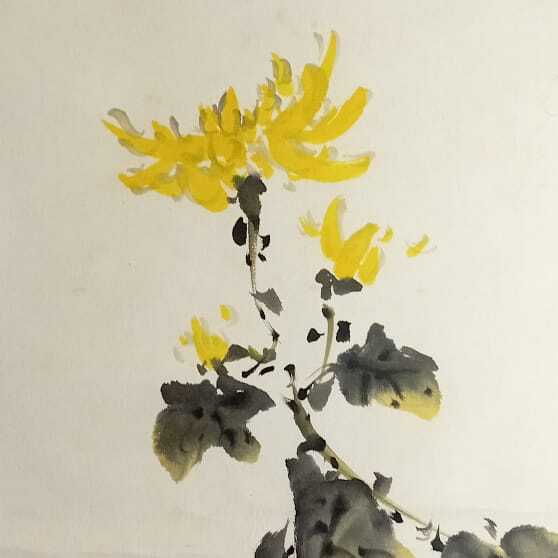
Kizaburo Ienaga / 家永騏三郎 1906–1990
Works on Shikishi
Kizaburo Ienaga was a Japanese painter associated with the yōga tradition of Western-style oil painting. Born in Fukuoka Prefecture in 1906, he developed his career within Japan’s institutional exhibition system during the early Shōwa period.
Ienaga was first accepted to the Teiten in 1927. In 1933 he participated in the inaugural Tōkōten exhibition, where he received an award, beginning a long association with the Tōkōkai artists’ society. By 1943 he had achieved mukansa status at the Bunten, allowing him to exhibit without preliminary jury selection.
After the war, Ienaga combined professional painting with art education. In 1950 he joined the art research institute connected with the Osaka Municipal Museum of Art. During the 1950s he became an established member and juror of Tōkōkai and was also invited to exhibit at Nitten. In 1966 he became a professor at Osaka University of Arts, and in 1967 travelled to Europe for further study of Western art.
His work includes coastal and marine landscapes, urban views, mountain scenery and still lifes. He worked primarily in oil, including on traditional Japanese shikishi boards - an unusual intersection of Western painting technique and a distinctly Japanese format.
Ienaga remained closely connected with Tōkōkai throughout his career and was later recognized as an honorary member of the society. He died in 1990. Today his work represents a regional but well-established strand of twentieth-century Japanese yōga, linking the prewar exhibition world with postwar artistic education and practice.
Ienaga was first accepted to the Teiten in 1927. In 1933 he participated in the inaugural Tōkōten exhibition, where he received an award, beginning a long association with the Tōkōkai artists’ society. By 1943 he had achieved mukansa status at the Bunten, allowing him to exhibit without preliminary jury selection.
After the war, Ienaga combined professional painting with art education. In 1950 he joined the art research institute connected with the Osaka Municipal Museum of Art. During the 1950s he became an established member and juror of Tōkōkai and was also invited to exhibit at Nitten. In 1966 he became a professor at Osaka University of Arts, and in 1967 travelled to Europe for further study of Western art.
His work includes coastal and marine landscapes, urban views, mountain scenery and still lifes. He worked primarily in oil, including on traditional Japanese shikishi boards - an unusual intersection of Western painting technique and a distinctly Japanese format.
Ienaga remained closely connected with Tōkōkai throughout his career and was later recognized as an honorary member of the society. He died in 1990. Today his work represents a regional but well-established strand of twentieth-century Japanese yōga, linking the prewar exhibition world with postwar artistic education and practice.